40 Button Lachenal Anglo Restoration
I recently fully-restored a 40-button Lachenal Anglo. It was in pretty poor condition when I received it. The wooden ends were non-original, damaged, and not very well made.
…
I recently fully-restored a 40-button Lachenal Anglo. It was in pretty poor condition when I received it. The wooden ends were non-original, damaged, and not very well made.
…
On my first instrument, the ends were held on with commercially-made stainless steel allen-head M3 screws. They work fine, but I felt they gave the instrument a bit of a modern, almost industrial look.
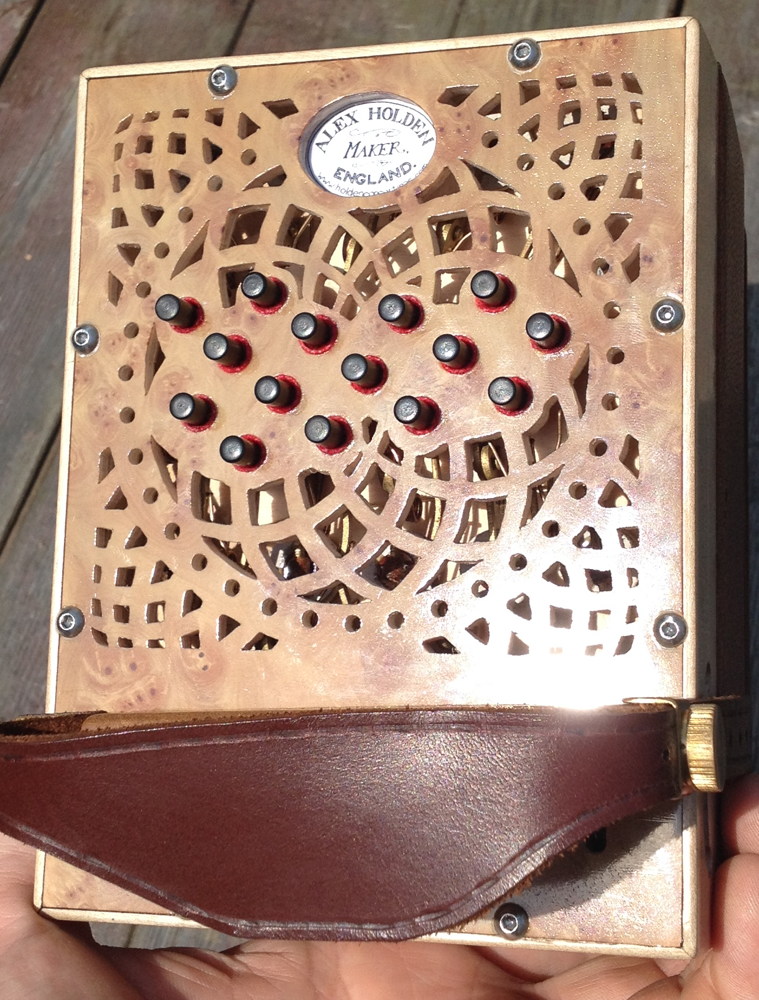
I am currently working on restoring a vintage Lachenal Anglo for a client, and the end bolts and captive nuts are missing or badly worn due to past over-tightening (probably from trying to cure leaks that were actually due to internal structural problems). Needless to say, it wouldn’t have been appropriate to replace them with modern screws. Rather than try to source a better second hand set from a parts dealer, I decided it was time to figure out how to make my own new brass end bolts from scratch.
…
My use of a working title to describe my first instrument in the past few blog posts was causing a little confusion, so I have now chosen an official name for the model: the Holden Concertinas Brun.
The name comes from the River Brun, which most historians believe my home town is named after (Brun Ley over time became Burnley)1. The name of the river may have come from the Old English word Brún, which is an adjective meaning, “brown, dark, dusky; having metallic luster, shining.”2
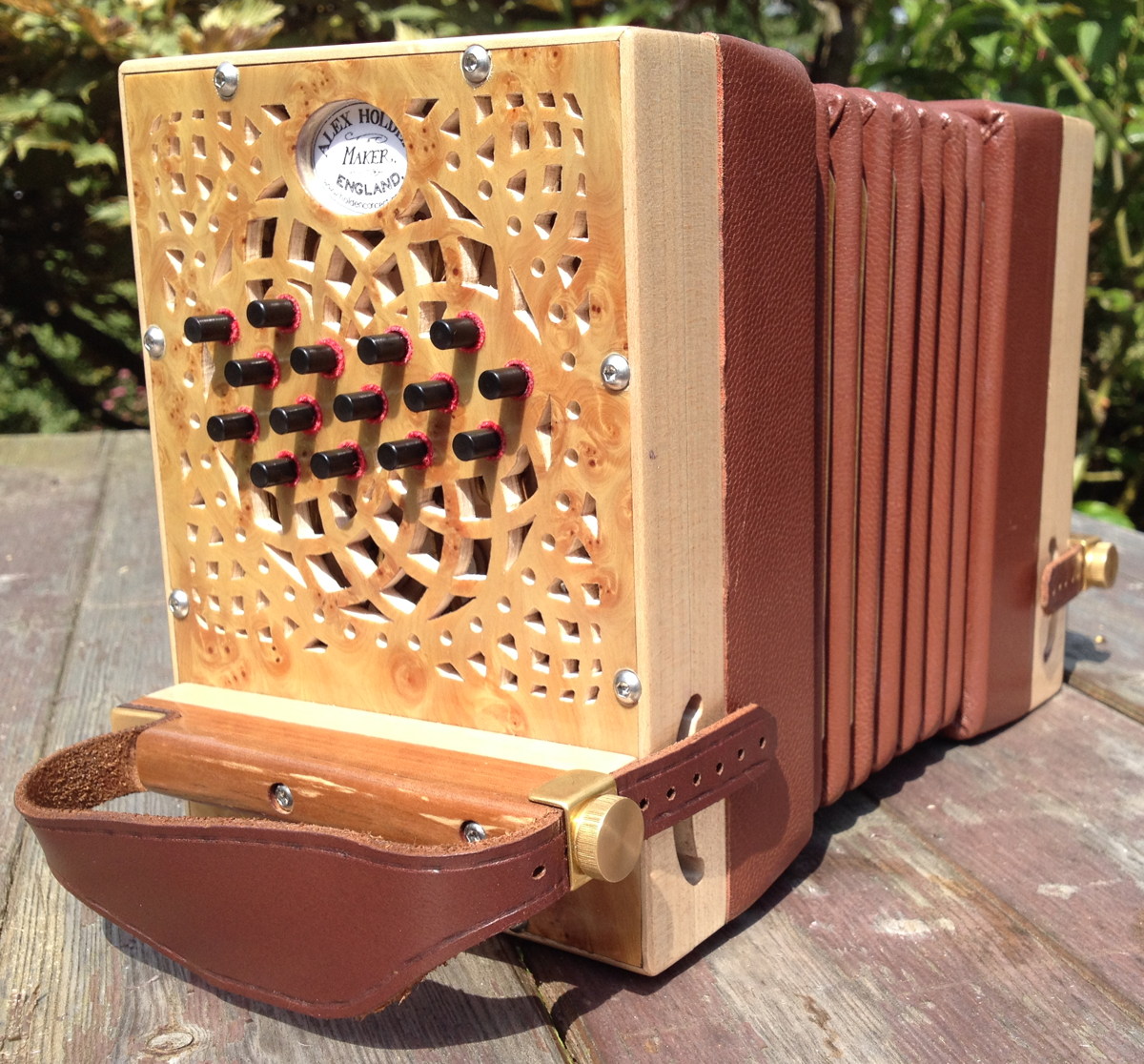
It has been a long and at times bumpy journey with a successful arrival at the end. I have produced a good quality, attractive, playable instrument, where I made every part myself except the reed clamp screws and end bolts. I have learned or improved many skills along the way: CNC, toolmaking, metalwork, woodwork, leatherwork, French polishing, tuning, and so on. Where I made mistakes along the way, I have learned from them, and I am certain #2 is going to be even better. The instrument is currently away being evaluated by an expert and I have already heard some encouraging feedback. Hopefully at some point I will be able to post links to reviews and videos of it being played.
What’s next? I am in the early stages of designing and tooling up to make a pair of new instruments, both of them fairly traditional 6 ¼” hexagonal Anglos, one with wooden ends and one with metal ends. A bit further down the road I have plans for a larger and more ambitious Hayden duet. I am also taking on more repair work: having made a complete instrument from scratch, I am now well-equipped to take on any aspect of fixing a traditional vintage instrument.