Alex

Chief cook and bottle washer.

Concertina Earrings

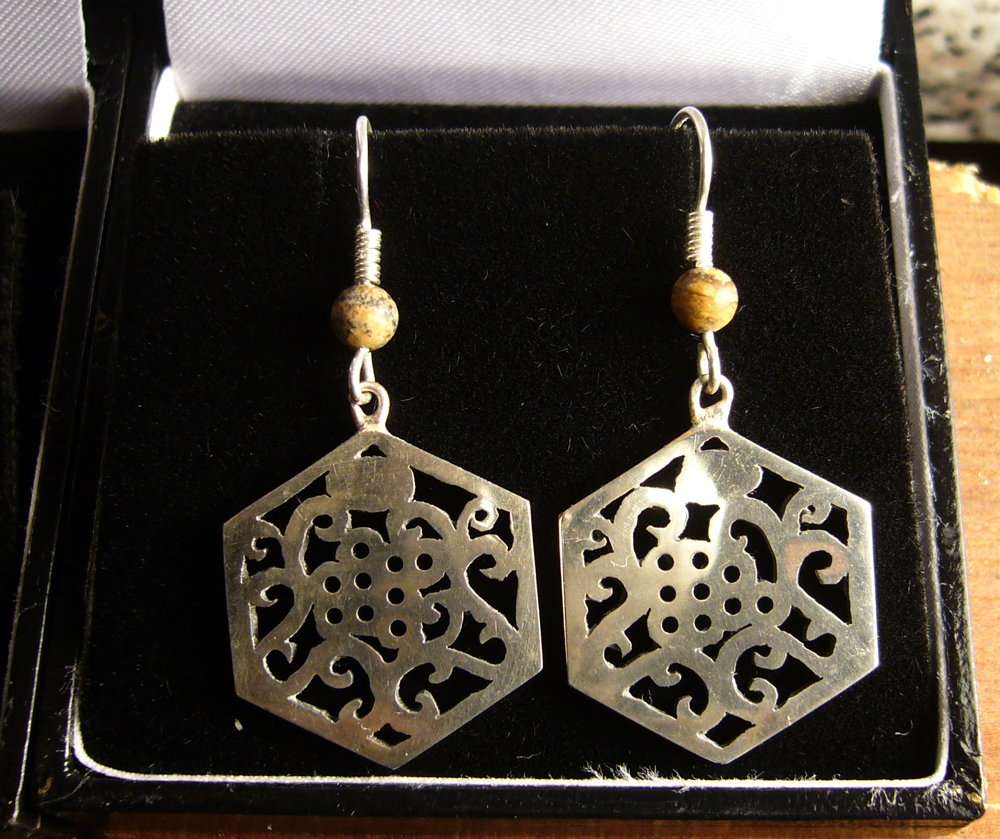
Here are a couple of Christmas presents I made for my nieces: hand cut concertina-shaped silver earrings.

The first pair is a hexagonal 18 button English, 19mm across flats. The layout goes from G up to C and includes two sharps and three flats (copied from the layout of a real 18 button semi-miniature).earrings1
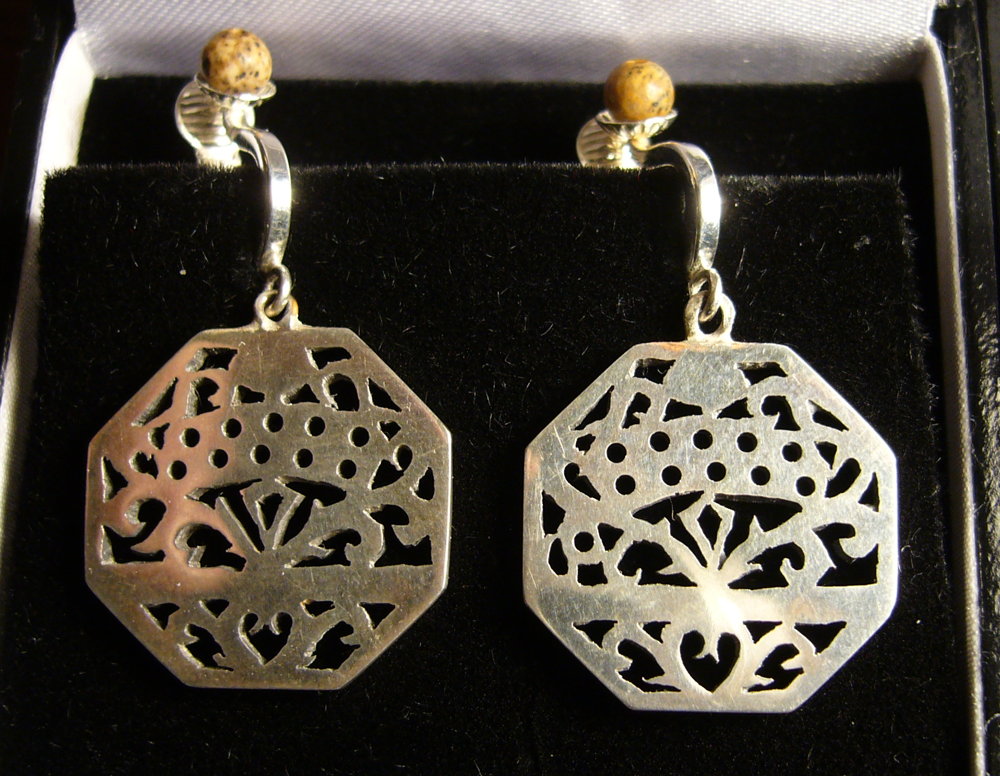
The second pair is an octagonal 20+1 button Anglo, 20mm across flats.
earrings2

My original plans included soldering on buttons and handrests, and engraving my maker’s mark onto the ovals, but the fretwork took far longer than expected and I ran out of time (I finished polishing them at 8PM on Christmas eve!). I didn’t realise until it was time to drill the piercing holes that the design I came up with for the anglo is much fiddlier than the English – lots of very small piercings.

What’s that you ask? Why yes, I do take commissions. There’s still plenty of time before Valentine’s day. 😉

Update: I have got a bit better at making these with practice. See the photos on this entry.
Manual Mill

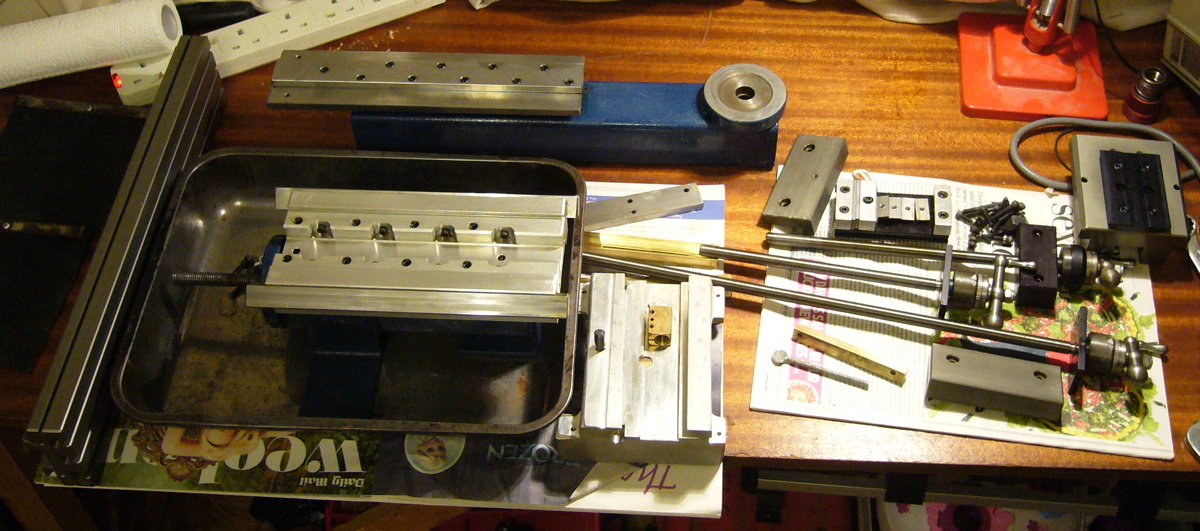
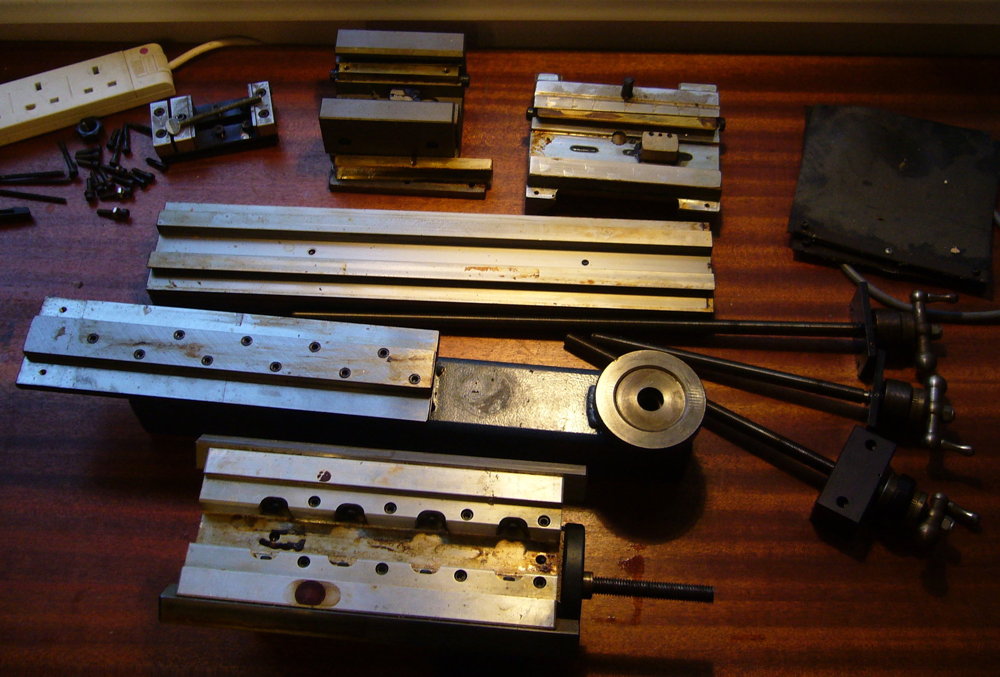
It took more than a day’s work to dismantle, clean, reassemble and adjust the Taig mill. Funny how sometimes you don’t realise just how filthy a thing is until you start scrubbing the layers of grime off it (in this case, dried oil and grease with swarf and dust embedded in it):

mill1

Shiny clean parts ready for reassembly:

mill2

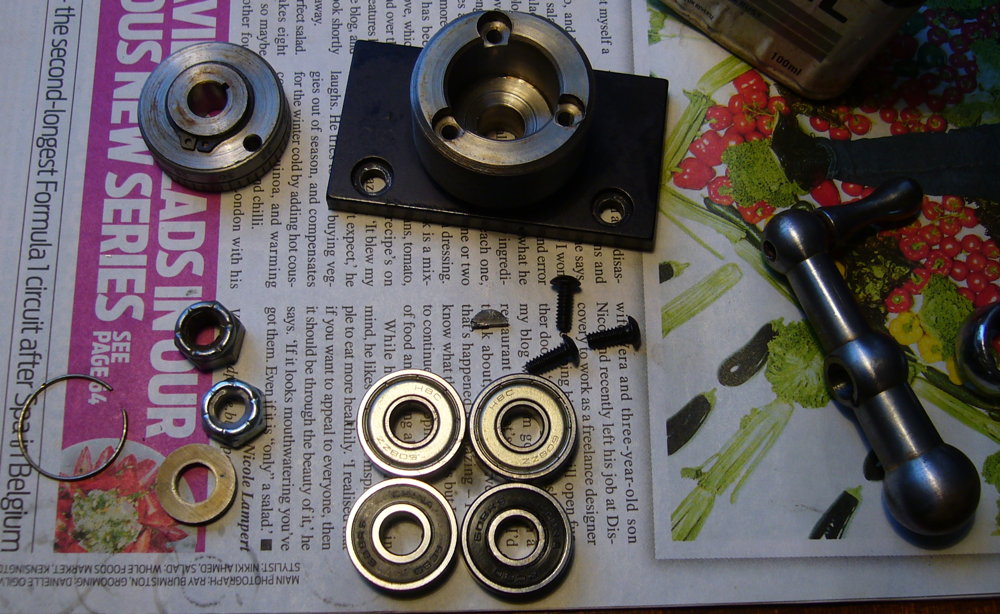
I also replaced the leadscrew bearings in the Y axis because they had gone rather lumpy. I’ll probably do the other two axes as well soon.

mill3

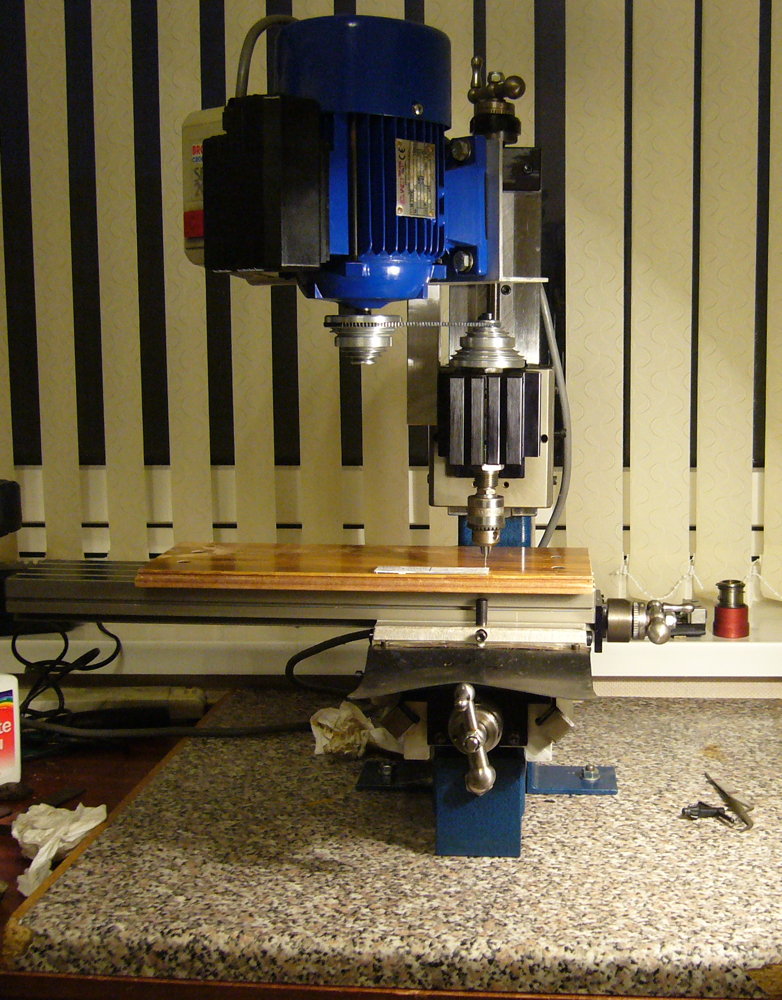
Reassembled mill, bolted to an offcut of kitchen worktop and ready to start a precision drilling job.

mill4

I need to drill about 120 holes, precisely located by eye (under magnification), 1mm dia or less in 1.5mm thick sterling silver. Annoyingly I broke two expensive Swiss 0.7mm HSS bits within the first few holes (not entirely sure why – it doesn’t help that you have no feel at all for how much torque you are applying). I am now using a 0.9mm carbide PCB drilling bit (which is bigger than I would prefer), and have successfully made it through about 40 holes by peck drilling and feeding very slowly indeed. I’m probably spending about a minute on each hole. CNC would certainly make the job easier, even if I was only using it to manually jog to each hole location before running a few lines of code to automatically drill the hole at a consistent feed rate.

Mucky Mill

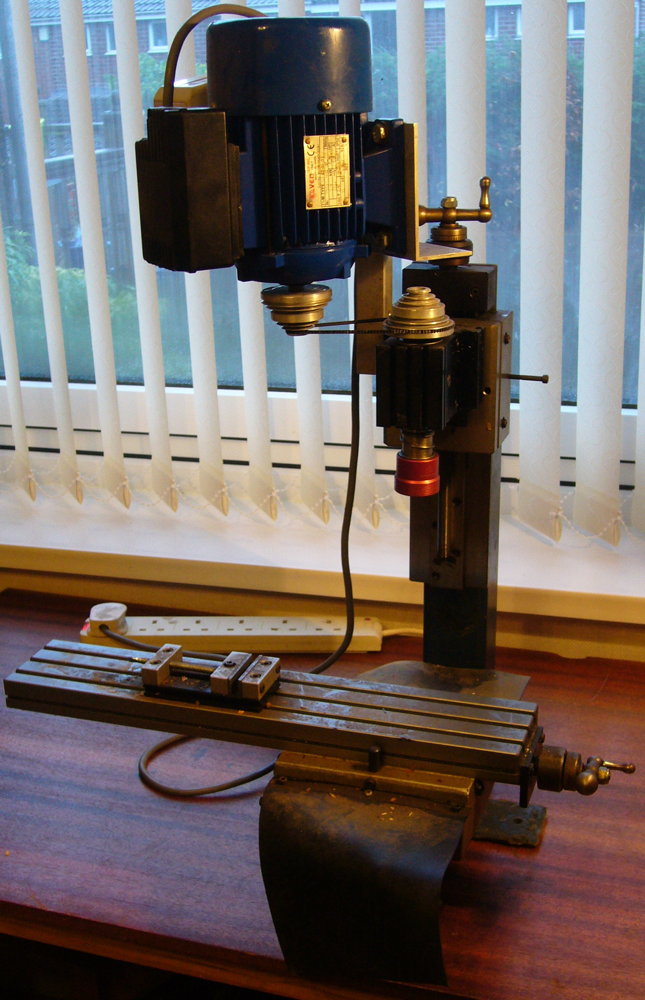
I’m back at my parents’ house for Christmas, and while I’m here I’m hoping to make a start on converting my Taig benchtop milling machine to CNC. It has been stored under a sheet of plastic in a damp shed since I moved out of my previous workshop about five years ago (crikey, has it really been that long?). Fortunately I smothered everything in oil at the time, so it hasn’t suffered too badly from rust – the worst bits are the handles, which I’ll be replacing with motors anyway. The oil has gone sticky and attracted a lot of dirt though, so my first task is going to be to completely dismantle, clean, oil, remantle (is that a word? if not, why not?), and adjust everything to run smoothly and accurately again. I have a little job coming up where a manual precision drilling machine would be very useful so I’m planning to do the first stage quite soon.

mucky_millThe thing on the spindle is a first generation HighTechSystems rapid tool changer. Unfortunately it’s now discontinued, though I already have a decent selection of holders for it and I think once I have converted my Taig lathe to CNC it shouldn’t be difficult to machine bespoke ones to hold different sizes of tool. The idea is you have a specific holder for each tool used in a job. You set up in advance a software table that tells the machine controller exactly how far each tool sticks out of its holder, so you don’t have to waste time re-zeroing it each time you change tools (which is a manual process but only takes a couple of seconds).


Bellpush For Sale

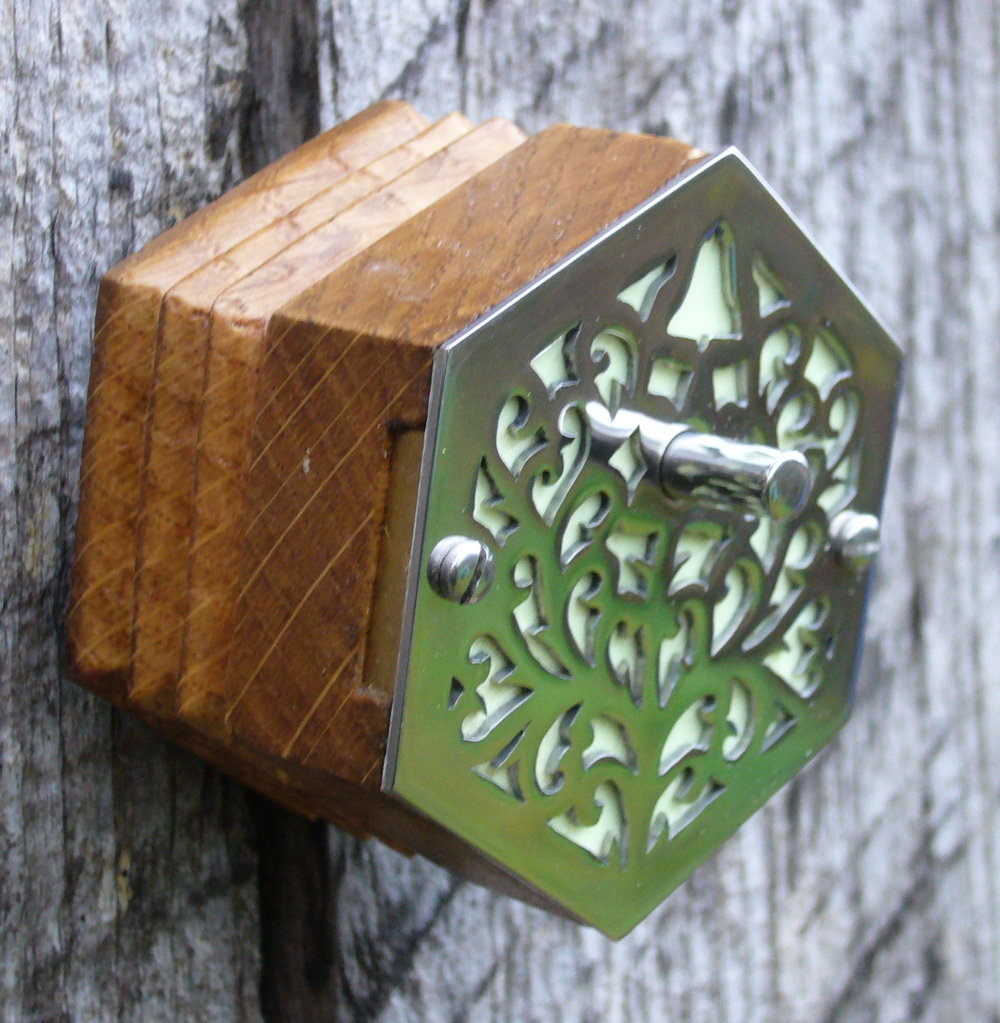
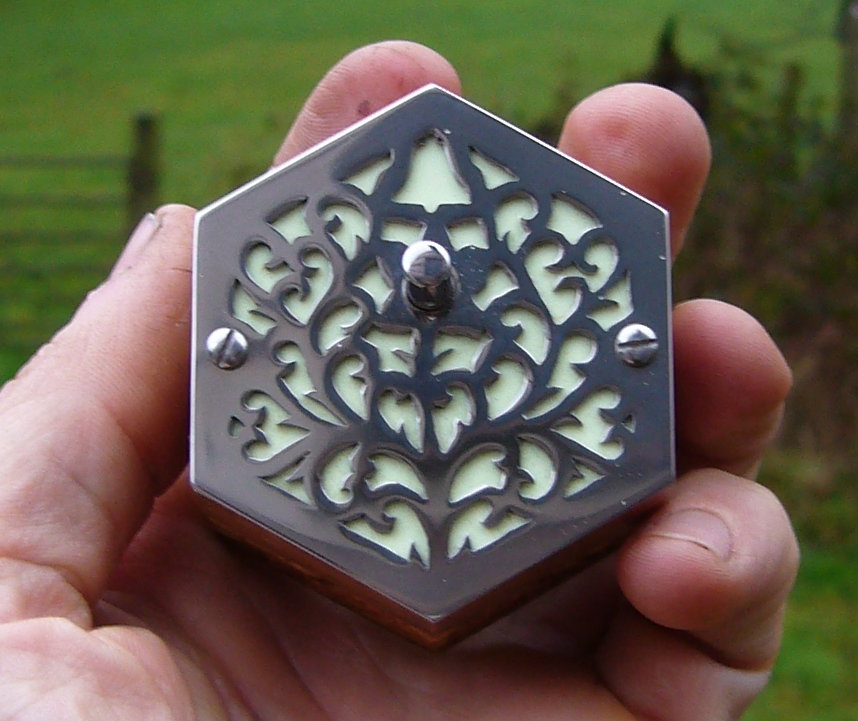
I’ve finished the bellpush and put it up for sale on eBay.

All the previous posts about the project are here.

Specifications

  • 2″ (51mm) wide, 2 ¼” (57mm) tall, 1 3/8″ (35mm) deep.
  • Hand cut stainless steel front plate.
  • Light green glow-in-the-dark vinyl membrane behind the fretwork.
  • Stainless steel button and front plate screws.
  • Varnished oak backing box.
  • Brass electrical screw terminals.
  • Heavy duty sterling silver contacts, suitable for electromagnetic bells.

finished_bell_push_1

finished_bell_push_2